About This Pattern
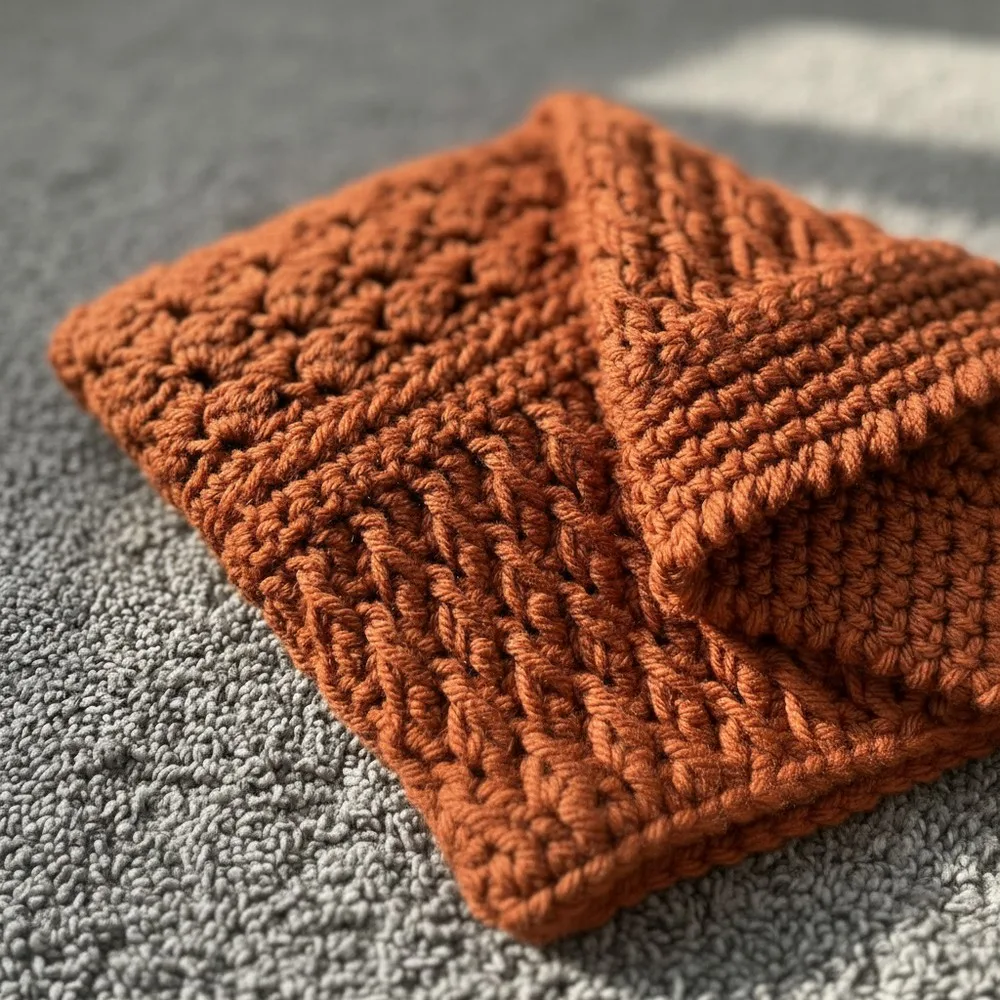
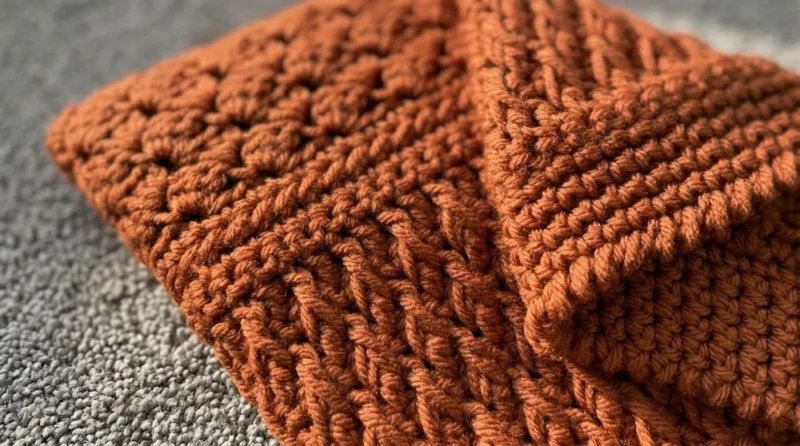
This throw sits somewhere between a project and an evening ritual. Each section changes texture, from a plain sc row to raised fpdc columns to bumpy sedge stitch. It rewards a slow pace, one part at a time, rather than a rush to the end. You need worsted yarn, a size I hook, and a little patience for the transitions. Once blocked, it settles into a soft, structured drape suited to a sofa or a reading chair.
In the basket
Yarn
Hook
Notions
Optional
Abbreviations
- ch
- chain
- st
- stitch
- sts
- stitches
- sl st
- slip stitch
- sc
- single crochet
- hdc
- half double crochet
- dc
- double crochet
- yo
- yarn over
- FPdc
- front post double crochet
- rep
- repeat
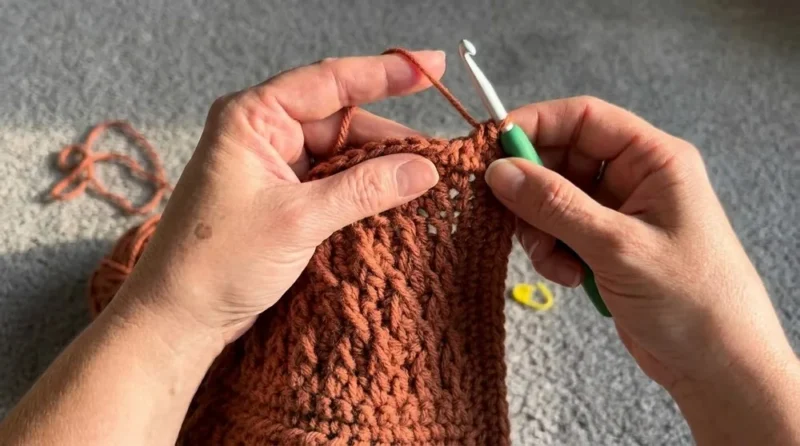
Textured forest throw with sedge and alpine stitches
Alpine Stitch Section
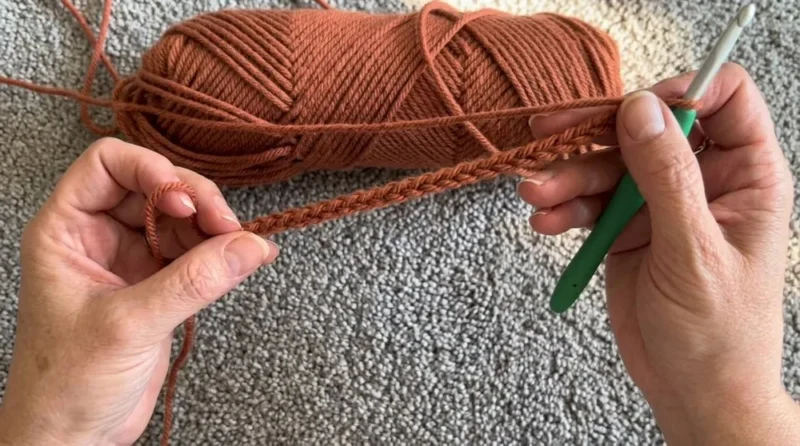
Foundation Chain: Ch a multiple of 6 (must be divisible by both 2 and 3) plus 1. Sample: Ch 25 (24 + 1).
- Round 1Single Crochet Foundation Sc in 2nd ch from hook and in each ch across. (24 sc for sample)(24)
- Round 2Double Crochet Row Ch 2 (counts as dc here and throughout), turn. Dc in next st and each st across to end . 24 sts (including turning ch).
- Round 3Single Crochet Row Ch 1, turn. Sc in each st across (be sure to work in top of turning chain at the end).Front Post Double Crochet (fpdc): Yarn over, insert hook from front to back behind the post of the dc two rows below, yarn over, pull up a loop (raise to height of current row), yarn over, pull through two, yarn over, pull through two.
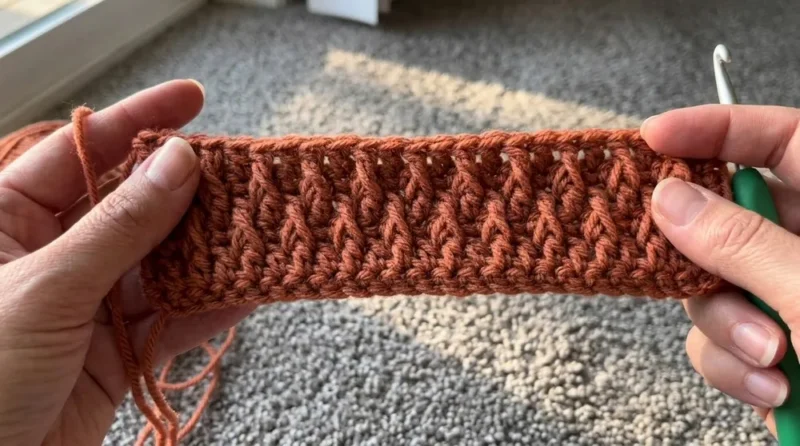
- Round 4Begin Alpine Pattern Ch 2 (counts as dc), turn. Alternate fpdc and dc across row as follows: Skip first st (under turning ch).Fpdc around the dc two rows below (Row 2), skipping the sc behind it.Dc in next st.Repeat * (fpdc around dc 2 rows below, dc in next st) *across, ending with 2 dc at the row’s end.
- Round 5Single Crochet Row Ch 1, turn. Sc in each st across (including top of turning ch at end).
- Round 6Continue Alpine Pattern Ch 2 (counts as dc), turn. Skip first st, dc in next st (above fpdc from two rows below).Fpdc around next dc from two rows below, skip the sc behind it.Continue alternating dc and fpdc, always making sure that dc sit above fpdc two rows below and vice versa.End with 2 dc at row’s end.
- Round 7Single Crochet Row Ch 1, turn. Sc in each st across.Row 8 and onward: Repeat Rows 4–7 for desired number of Alpine stitch rows in the section (sample worked 9 rows in total).Divider Section (Separating Alpine and Sedge Stitch Sections):
Divider Section
- Round 1Single Crochet Ch 1, turn. Sc in each st across.
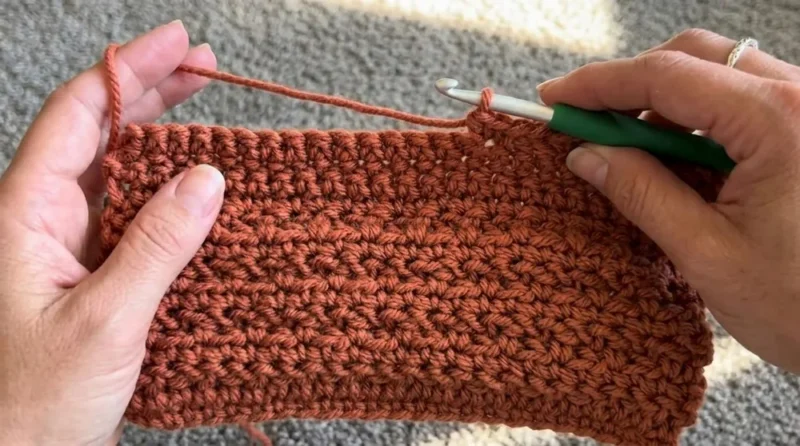
- Round 2Hdc Slip Stitch Row Ch 1, turn.Step by step For each st: YO, insert hook in next st, YO, pull up a loop, pull through both loops on hook (hdc slip st).
- Round 3Single Crochet Ch 1, turn. Sc in each st across.
Sedge Stitch Section
Sedge Stitch Group: In the same st, work: (sc, hdc, dc).
- Round 1Establish Sedge Stitch Ch 1, turn. (In first st): Hdc, dc (both in same st) Skip 2 sts, in next st: (sc, hdc, dc) all in the same st
Repeat from * across. If you have 2 sts remaining, skip both and sc in the turning ch at the end of the row.
- Round 2and Onward: Continue Sedge Stitch Ch 1, turn. (Hdc, dc) in very first st, skip 2, (sc, hdc, dc) in next st; repeat across, end with sc in turning ch.Repeat Sedge rows as desired (sample showed 5 rows).Divider Section (Repeat): Work another set of: Single crochet row, Hdc slip stitch row, Single crochet row.Repeat Sections: Alternate Alpine, divider, Sedge, divider until blanket reaches your desired size, finishing with an Alpine section for harmony.
Border
- Round 1Single Crochet Border Ch 1, turn. Sc in every st around the blanket , putting 3 sc in each corner . Along straight sides, evenly space sc stitches. Use a stitch marker for the first st in each corner.Sl st to first sc to join.
- Round 2-4+: More Single Crochet Rounds Do not turn or chain up. Sc in each st around, 3 sc in each corner . Use stitch markers to keep track of corners.Repeat as many border rounds as desired.Crab Stitch (Reverse Single Crochet): Single crochet in the direction opposite to your normal. For right-handed, work left-to-right around the blanket.
- Final RoundFinal Round: Crab Stitch (Reverse Single Crochet) Without turning, working right to left (for right-handers), insert hook into st to right , YO (from under), pull up a loop, YO, pull through 2—this is one crab stitch. Work 1 crab stitch in each st around ; corners: only 1 crab stitch in each corner stitch for neatness.Fasten off, weave in ends.
More pictures
Before the first stitch
- Check your worsted yarn amount before starting, since texture rows use more yarn than plain sc.
- Place stitch markers at each turning chain and corner, so edges stay square through every part.
- Work a small swatch of the hdc slip stitch row first, to find a relaxed tension before the real thing.
Minutes per piece
- Foundation and alpine section about 2 to 3 hours, because 7 rounds include fpdc shaping worked around stitches two rows below
- Sedge stitch section about 1 to 2 hours, because each row repeats the same small pattern slowly across
Other yarns that work
- Wool blend, worsted weight Adds warmth and a fuller drape, with the same size I hook.
- Cotton blend, worsted weight Sharpens stitch definition but drapes stiffer, so a slightly larger hook may help.
Where it ends up
- A throw for a reading chair, paired with a small side table lamp.
- An accent layer across a sofa arm, next to plain knit cushions.
- A lap blanket for quiet afternoons, kept folded near a window seat.
Small notes
- Use a size I (5.5 mm) hook throughout, since tension shifts with each stitch section.
- Mark the top of every turning chain, so you never lose count between parts.
- Keep hdc slip stitch rows loose and twist the hook slightly, to pull loops through without strain.
- Foundation chain must be divisible by both 2 and 3, then add 1 extra chain for turning.
- Always work into the top of turning chains at row ends, especially after double crochet rows, to maintain stitch count.
- Only 1 crab stitch per corner in the final border round, not 3 — the 3-sc corner rule applies only to the plain single crochet border rounds.
Little questions
Why does the pattern mix so many stitch types?
Each section adds a different texture, like alpine ridges or sedge bumps. This keeps the throw visually layered rather than flat. It also breaks the work into manageable stages.
Why is my hdc slip stitch row too tight?
This row often tightens if you hold normal tension. Try twisting the hook slightly as you pull each loop through. A quick swatch first helps you find the right looseness.
Can I check my row count against the sample?
Yes, the sample used 24 stitches from the sc foundation row. Sedge stitch rows in the sample repeated five times. Use these as a rough guide, not a strict rule.
Do I need to block this throw?
Yes, blocking evens out the mixed textures nicely. It also sharpens the definition of the fpdc and sedge sections. Skipping it leaves edges less crisp.
Original pattern: https://redagapeblog.com/crochet-forest-throw-free-pattern/

About the Author
Tamsin Okoro Who writes the patterns at Yarn Gallery, how a pattern gets from the hook to the page, and what this site will never do.