About This Pattern
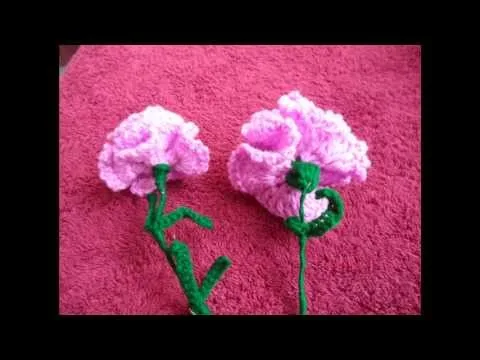
This carnation is one long strip, coaxed into ruffles. It starts flat, on a chain of about fifty stitches. Then it grows fuller, row by row, until it curls on its own. Rolling it into a flower takes a few quiet minutes. It sits well on a table, in an evening. It needs soft yarn, a small hook, and a little patience for the rolling.
In the basket
Yarn
Crochet Hook
Tapestry Needle
Scissors
Abbreviations
- sc
- single crochet
- dc
- double crochet
Crocheting a ruffled carnation flower from a simple strip
Step 1: Create the Foundation Chain
- Foundation ChainStart by chaining about 50 stitches.
This will form the base for your carnation's ruffled petals. You can adjust the number of chains depending on how large or small you want your carnation to be.
Step 2: Work the First Row of Petals
- Row 1Starting from the second chain from the hook, work one single crochet (sc) into each chain across the row.
This row forms the foundation for the petals.
Step 3: Create the Ruffles
- Row 2Chain 3 and turn your work. In the first stitch, work 3 double crochets (dc) . Continue across the row, working 3 double crochets in each stitch.
This will create the ruffled effect that mimics the look of carnation petals.
- Row 3Chain 3, turn, and work 4 double crochets into each stitch across the row.
Step 4: Form the Carnation
Shaping Once you've completed the final row, your work will look like a long, ruffled strip. To create the carnation shape, begin rolling the strip tightly from one end to the other.
Sewing Use a tapestry needle and matching yarn to sew the bottom of the flower together as you roll it up. This will secure the flower and keep it in its desired shape.
Step 5: Add the Stem (Optional)
- StemCrochet a simple chain about 12-15 stitches long and sew it to the bottom of the carnation.
You can also use floral wire wrapped with green yarn to create a sturdy, flexible stem.
Add crochet leaves to the stem using green yarn and a basic leaf pattern (chain, single crochet, and slip stitches) for a more natural look.
More pictures
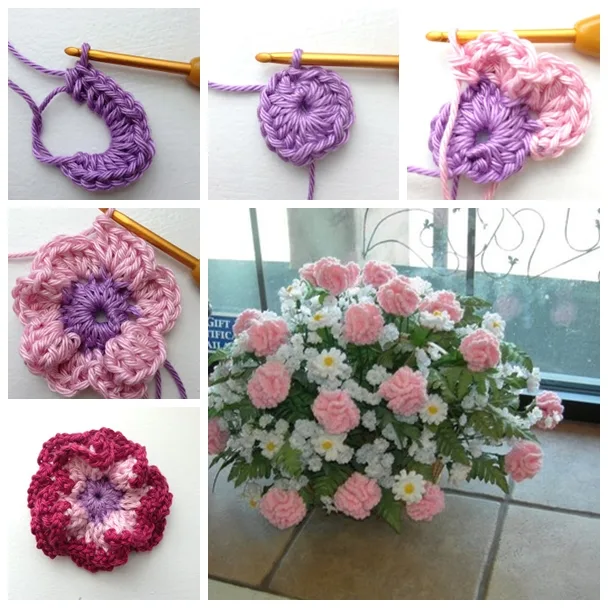
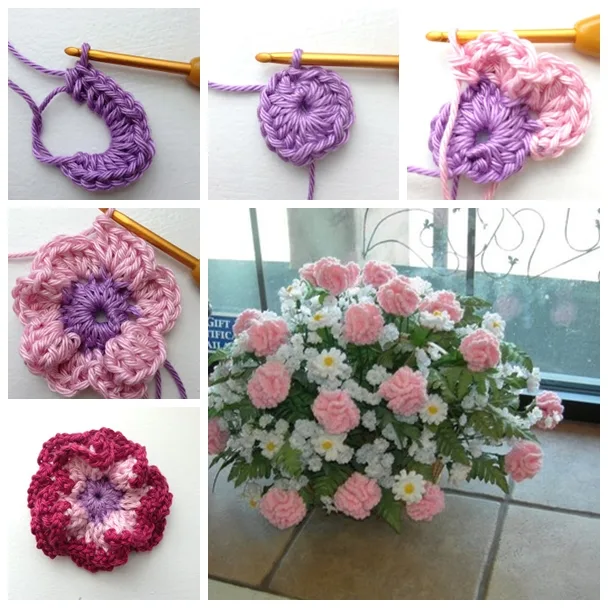
Before the first stitch
- Chain about fifty stitches loosely, so the strip doesn't pucker later.
- Check your hook matches your yarn, somewhere between 3.5mm and 4mm.
- Read through Row 2 and Row 3 first, so the ruffle jump makes sense.
Minutes per piece
- Step 2: First row of petals about 10 minutes, because it is one plain row of single crochet across fifty stitches
- Step 3: Ruffles and rolling about 30 minutes, because two rows of clustered double crochets take patience, then rolling adds time
Other yarns that work
- cotton, worsted weight gives crisper petals and a firmer roll, good for a smaller flower
- acrylic, worsted weight gives softer drape and a looser ruffle, better for a fuller-looking bloom
Where it ends up
- A single stem for a vase, paired with plain glass or a small jar.
- A brooch or hair clip, paired with a felt backing.
- A trim on a wrapped gift, paired with plain paper.
Small notes
- Keep your tension even on Row 1. A tight foundation row makes the ruffle sit flatter later.
- Use a hook that suits your yarn, from 3.5mm to 4mm. A smaller hook keeps the petals tighter.
- Sew as you roll, not after. A few stitches per turn hold the shape without extra fuss.
Little questions
How many chains do I need to start?
Chain about fifty stitches for the foundation row. You can chain fewer for a smaller carnation, or more for a larger one.
Why does the strip curl instead of lying flat?
The double crochet clusters in Row 2 and Row 3 add more stitches than the row below. That extra fullness is what makes it ruffle and curl.
What hook size should I use?
Use something between 3.5mm and 4mm, matched to your yarn. A smaller hook in that range gives tighter, neater petals.
Can I make the carnation bigger or smaller?
Yes, just adjust your starting chain count. A shorter chain gives a smaller flower, a longer one gives a fuller bloom.
Original pattern: https://crochetblog.net/diy-crochet-carnation-flower/

About the Author
Tamsin Okoro Who writes the patterns at Yarn Gallery, how a pattern gets from the hook to the page, and what this site will never do.